The Holy Quran and Hadith, myths and misunderstandings - Azgar Nuhman
An Important quality of the Quran is that it gives us only basic but essential principles, often resorting to reiteration to emphasize them. On the contrary, non-basics, or matters relating only to names, forms and rituals constitute only a negligible part of the scriptures.
This is in consonance with the Quranic scheme, the importance of names, forms and rituals being entirely secondary. To the Quran only those precepts are important which figure as fundamental guidelines. The aspect of the Quran is so clear that its reader cannot but appreciate it.
However, the truth is that the inner spirit (Consciousness, Righteousness Taqwa) is of the utmost importance in the building of the Islamic personality.
The word Taqwa Righteousness (consciousness) belong to all mankind and not to a community following Islam inherited by birth.
Once the inner spirit is developed, correct form will naturally ensure. But names, forms, Arabic expressions and religious rituals on its own can never produce the inner spirit.
That is why the aim of the Quran is to initiate and bring to fruition an intellectual revolution within man. The expression used by the Quran for this intellectual revolution is
Maarifah – Realization of the truth. (5.83)
The Quran stresses the importance of man’s discovery of truth (WISDOM) at the levels of REALIZATION. Not reading and reciting the Quran. True FAITH in Allah (God) is what one achieves at such a level.
Where there is NO REALIZATION, there is NO TRUTH, when there is no TRUTH, there is no BELIEF.
The Quran possess an external appearance and a hidden depth, that means an exoteric meaning (surface meaning) and an esoteric meaning. A surface meaning commonly understood by all and an esoteric meaning understood by the wise.
The meaning or the interpretation of the Quran differs according to each person’s level of Takwa (righteousness) not the level of Arabic language.
Quran has a layers of meaning to each follower according to his or her level of CONSCIOUSNESS and RIGHTEOUSNESS (level of Takwa )
Thakwa does not include faral and sunnah = commands because these are disciplines (means) to reach consciousness.
Imam Jaffer Sadiq once said the book of Allah (God) comprises four characteristics following the accretion of Takwa – consciousness in spiritual elevation/advancement and self-realization.
a. The statements set down – For the ordinary ignorant followers
b. The allusions – (indirect references) – for the wise
c. The hidden meaning relating to the supra sensible world (friends of Allah = vicegerants). Ex. Waliyullahs, saints, Saaliheen, Shuhada, muththakeen, Sowan, Rishi’s, Muniwars and Yogis – spiritually enlightened
d. Exalted spiritual doctrines – for the Kuthubs and Prophets
If there is no hidden depth in the Quran and if any ordinary follower can read and understand its contents, what is the difference between the Quran and a novel?
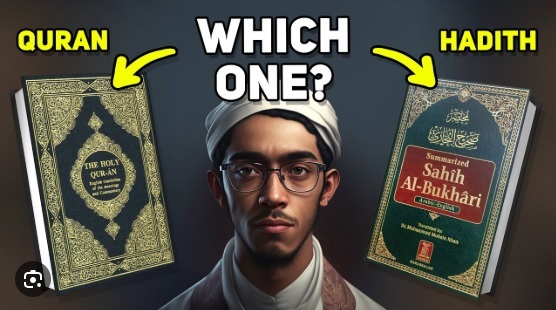
Today all the Hadīth books are sectarian books that were compiled by Persians centuries and centuries after the Prophet demise. They have nothing to do with Dheenul Islam and the Prophet. The early generations never followed them—they followed only the Quran. The esoteric meaning of the Quran, not Tafsir (zahir) but Baathin.
It was the greedy power-seeking sectarians leaders and so-called religious scholars who merged these books into the Dīn (Dheen), and you and I were later born into a time where this was already the norm. But The Most High has already placed all the warnings in the Quran, so if we read His Book, we will recognize them.
During the Golden Islamic era there were no sectarian scholars as Ash Sheikh Mufti’s, Alim’s, and Doctor sheikh’s but only
SPIRITUALLY ENLIGHTENED SOULS
These sectarian books became dominant only because most people did not know Dheenul Islam or spiritual doctrine of Islam. Another fact is our ancestors could not read and understand Arabic, so they were deceived into following sectarian paths that were labeled as “Islam”, but that’s sectarianism.
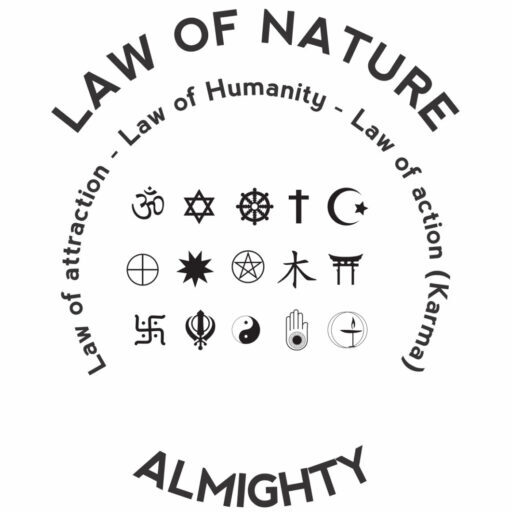
Allah (The Law of Nature) strongly forbids division in the Dheenul Islam -Dīn and sectarianism and judging with anything other than what God (Allah – Law of Nature) has revealed.
Man must abandon these sectarian books altogether and hold firmly to the Quran alone. Have consciousness and be mindful of Him (Law of nature) He (God – Law of Nature) sees everything we do.
Do not follow the popular crowd. Heed His (Law of Nature) warning and follow His reminder — The Holy Quran.
However, the meaning or the interpretation of the Quran differs to each person’s level of consciousness, not the level of Arabic. The reader needs to know a little Arabic to read the original script but the inner meaning differs to each person’s level of consciousness. The current English interpretation is a literal not spiritual.
These sectarian books (Hadiths) were compiled after 300 years of the prophet’s death. These Sectarian scholars took or gave ownership of Islam to a community that inherited to Islam by birth and who followed its fundamental guidelines and the pronouncement of Kalima shahada.
Majority of the Hadith testify full of subterfuge, over-doings, exaggerations, repetitions, segregating Islam to a community born in Islam by birth. Prophet’s spiritual life lessons and experiences were turned into magic stories by taking its literal meaning. Quran verses were chanted number of times in repetitions and rituals overdone in quantity resulting of abundance of rewards which can settle against evils man do which does not comply with God’s true guidance the Holy Quran.
Sectarian scholars used these hadith collections, compiled them to dictate the five pillars of Islam and its fundamental guidelines. They created a fear of merciful Allah that he punish man if not believe, worship and follow his commands.
The Law of Nature in the Quran has been wrongly interpreted in the hadith as commands of God
Allah the Law of Nature does not govern man by man made commands, laws and rulings. The Law of Nature (Allah) govern man by the source of love and its own nature of laws.
These sectarian scholars force man to obey man made laws and commands in the hadith to earn rewards. They made the pronouncement of kalima shahada as a fundamental requirement to name a Muslim and one who don’t pronounce as a none-muslim or a Kafir.
Following disciplines such as fasting and haj made to reward earning schemes to be settled with evil deeds. Evil done repeatedly as a routine has been compensated by different names of repentance such as thouba, ithikaaf, sajada and istigfaar.
They portray man made laws in the hadith as Allah’s commands — none of which align with the Quran.
They took or gave the ownership of Dheenul Islam to a community inherited to Islam by birth, pronunciation of shahada and outcast people born to other faiths as Kafir’s. They dictate if anyone wish to come to Islam has to convert and embrace Islam in order to become a Muslim which is contrary to spiritual Islam.
In Dheenul Islam (spiritual Islam) only consciousness matters. Disciplines are made obligatory to reach consciousness. Kalima shahada, fundamental guidelines, faral, sunnah and sharia are disciplines (means) to REACH CONSCIOUSNESS (Taqwa)
However Persians had a cultural love for literature and record-keeping even before the Quran was revealed. It is out of what they were accustomed to; that is why many Persian men left their countries centuries and centuries after the Prophet died to collect these tales and narrations. Persians themselves as a society, accepted Dheenul Islam after the death of the Messenger. Centuries later they left their land and journeyed to collect these stories, but they
themselves ended up rejecting almost all of them, and even the few they kept, they classified as authentic, accepted, and weak.
The fact is anybody can accept Islam by words, thoughts and follow its fundamental guidelines strictly but who has consciousness towards his fellowmen is known to the person himself and to – Allah – The Law of Nature alone.
Most of these Hadīth books are sectarian books and each sectarian ḥadīth book contradicts itself, and that book too contradicts the other books within the same sect, let alone the books in other sects.
They themselves say the Messenger never said it is “ṣaḥīḥ” (authentic). How can they say it is ṣaḥīḥ when the prophet died over 200 years before they were collected?
It is only popular today because all the sects clung to their sectarian books and preferred it over the Quran. The Book from The Lord of the worlds, Him without any error or contradictions.
Do you know what it means, that God revealed this message to Muhamemd (pbuh) to guide mankind out of his (God’s) mercy.
He reveals in that the “The guidance is only upon him alone and no one else can guide His servants”
Servants means not a community following Islam but ALL MANKIND regardless of religious divisions.
Only He manifested us and only He will guide us and there is no other guidance anywhere else. The people who came later abandoned it.
They took the sectarian books that till date they are still debating on which is authentic, which is acceptable and which is weak.
Now they have set aside the Quran that God said is fully detailed, clear and sufficient. They only use the Quran for recitation and for salah. Even with that they still mix their own sectarian recitations and after the salah they abandon the Quran and go follow what their soul desires. Do they not know that Allah sees?
They set aside the Quran and follow lies and books they themselves full testify are full of subterfuge, yet they just accept it like that and abandon HIS true guidance.
Allah has promised to render worthless peoples deeds. Honestly abandon the ways of the people on earth and turn to God and the Quran which he gave us to follow.
These sectarian Hadiths creates a religious image centered mostly around words, names, forms, Arabic language, expressions, rituals and external behavior.
Names, forms, rituals and expressions belong to a community has made more important than moral, ethical and righteous deeds common and belong to all mankind.
The Qur’an aims at a spiritual and moral transformation of a person. The real Sunnah is not external names, words, forms, expressions and appearance, but qualities of the heart (self)
The Qur’an nowhere Commands:
“Walk exactly like someone”
“Your beard must be this long” “Sit in this particular manner”
“Drink water in three sips”
“Sleep in a particular manner”
But the Qur’an repeatedly says:
“Those who do RIGHTEOUS deeds will be REWARDED”
Quran refers as YOU to the entire mankind
The word believer is referred to a purified soul, purified by heart not by ablution.
Rewarded means REALIZATION, realization of the self (nafs)
“The closest to Allah (God) are the most just and sincere”
“The closest to Allah (God) are the person who does not harm anybody”
“The closest to Allah are those who shun ego”
“The closest to Allah are those who efface achievements and dislike recognition”
Following are the claims, the six major Hadiths collection in Sunni Islam are known as al- Kitub as Sittah (The six books)
1. Sahih al-Bukhari
- Full Name: Muhammad ibn Ismail al-Bukhari
- Origin: Bukhara (now: Uzbekistan)
- Ethnicity: Persian
- Period: 238 years after the Prophet
- Hadiths Collected: 600,000 hadiths and claimed to have memorized them all,
including the names of all the narrators in the transmission chain, passed
down orally from one generation to the next. - Hadiths retained: 7,500 (~2,600 without repetition)
2. Sahih Muslim
- Full Name: Muslim ibn al-Hajjaj al-Naysaburi
- Origin: Nishapur (now: Iran)
- Ethnicity: Persian
- Period: ~243 years after the Prophet
- Hadiths Collected: ~300,000 hadiths and also memorized, including the
names of all the narrators. - Hadiths retained: ~7,500 (~4,000 without repetition)
3. Sunan Abū Dāwūd
- Abū Dāwūd al-Sijistānī
- Origin: Sijistan (now: Eastern Iran/Afghanistan)
- Ethnicity: Persian
- Period: ~257 years after the Prophet
- Hadiths Collected: ~500,000 hadiths
- Hadiths retained: ~4,800
4. Jami‘al-Tirmidhi
- Full Name: Muhammad ibn Isa al-Tirmidhi
- Origin: Tirmidh (now: Uzbekistan)
- Ethnicity: Persian
- Period: ~260 years after the Prophet
5. Sunan al-Nasa’i (also called al-Sunan al-Sughra)
- Full Name: Ahmad ibn Shu‘ayb al-Nasa’i
- Origin: Nasa (now: Turkmenistan)
- Ethnicity: Persian
- Period: ~283 years after the Prophet
6. Sunan Ibn Majah
- Full Name: Muhammad ibn Yazid Ibn Majah
- Origin: Qazvin (now: Iran)
- Ethnicity: Persian
- Period: ~255 years after the Prophet
The Quran was revealed to Muhammed (pbuh) to pass the message of humanity to the
entire mankind not to a community following Islam by birth, pronounced Kalima and who
follow fundamental guidelines of Islam
The revelation was a mind reading one
In the Qur’an, rewards are not based on words, expressions, rituals and physical gestures,
But in mind, character, ethical actions, Realization, consciousness towards fellowmen and moral integrity of a man.
Why Did Hadith Focus on External Behaviors?
Historically People wished to imitate the Prophet’s personality and his lifestyle more than
his message to humanity. Later, some groups turned those personal habits into rigid
religious laws. Many tribes and cultural customs were mixed and labelled as “Islamic.”
Over the years the community dominated the religion by birth, hadith , outward sunnah
constituted in the hadith and man-made laws were included to the religion Islam and people
born to other faiths were labelled as Kafir.
Thus, a religion of outward body-language came to appear as a moral religion.
But the Qur’an says the opposite:
“Allah loves those who are just.”
“The greatest Sunnah is RIGHTEOUS conduct and consciousness towards mankind”
“Allah does not look at your names, words, beard , jubbah, Arabic expressions, rituals, spot
on your forehead and your attire but at a man’s HEART”
Religiousness should lead towards consciousness
If consciousness cannot be achieved, religiousness is not beneficial
Religiousness cannot bring righteousness but
Righteousness would lead a man towards religiousness
Hadith Focus — Imitational Sunnah belong to a community following Islam by birth, lifestyle
habits, physical behaviors, gestures, personal routines, expressions and rituals.
Qur’an Focus — Ethical Sunnah belong to all mankind
Good deeds, sincerity, sensitive to injustice, honesty, simplicity, efface achievements, shun
recognition, modesty, contentment, self-effacement, shun recognition, service to humanity.
Sin (evil done) is a sin
Sin cannot be classified as minor and major
Man’s duty on earth is to serve another man consciously and righteously. Not to selfishly
believe, worship and repent to God a God and be insincere to his fellowmen
More than believing, worshiping God (Allah) and being insincere, selfish, greedy and proud to your fellowmen, the duty of man is to serve mankind
The purpose of life is to know your own self
because God is within you closer to you than your jugular vein – Quran 50.16
Man cannot believe God in a true sense because man continuously sin (harm his fellowmen)
as a routine and repent repeatedly
What is the big deal believing and worshiping a God when man is insincere, greedy, selfish,
proud and ego towards his fellowmen?
How can man harm his fellowmen continuously as a routine and repent God and believe his
evils are pardoned?
Man cannot worship God (Allah) in a true sense because when he worships God does not
come to his mind practically
During your prayers whatever enters your mind other than God is an idol
The objective of life is to elevate your nafs from greediness to generosity
Evil energy cannot be eliminated or pardoned through thouba (Repentance) and prayers
unless man himself change
Evil nafs (negative energy) has to undergo self-realization until it finds the pure existence of
man’s consciousness
Man cannot take ownership of Islam inherited by birth or by the pronouncement of kalima.
Who is suitable to be a Muslim and who is entitled to be in Islam is decided by not how
religious a man is but how consciousness a man is.
A prophet came 1400 years ago. He revealed a beautiful message from God the Law of
nature to the entire mankind.
The message sent down told man that you were created in pair, divided you into tribes and
nations, for all to understand and love each other, not to enter into conflicts but the best
among all the conscious come to me sooner
He did not say the best among you are the Muslims or the believers
The message demonstrated man to seek love Love, find peace, to be united and to live in
harmony
He sent down a divine message to all mankind to seek and gain wisdom (self-knowledge or
knowledge without doubt) from cradle to grave, not world knowledge learnt outside.
He told man to know his own self (nafs) so that man can know his lord.
He who knows himself, knows his creator.
Man arafa nafsahu, fakad arafa Rabbahu – Spiritual sayings of Muhammed (pbuh)
He told man to be sincere in dealings, modest in attitude, peaceful in behaviour, content in
desires, sensitive to injustice, selfless in character WITH HIS FELLOWMEN and to be simple in attire, efface achievements and shun recognition to suppress ego BEFORE HIS
FELLOWMEN
He said man to happily accept whatever without protest and to gracefully give up whatever
not meant for him
Leaving this beautiful message of humanity, the ignorant man started to imitate the
external gestures of the prophet.
How did the Prophet get married?
How many wives did he married?
What food and how did he eat?
How did he brush his teeth?
How did he dress?
How long is his jubbah?
How did he tie the turban? how long his beard etc etc
As I said before the meaning of the Quran differs to each person’s level of consciousness.
However the interpretation written by the so-called scholars before is not a spiritual (Baatin)
interpretation but a literal interpretation (zahir) which is called Tafsir.
At this time, the Holy Quran critically needs a spiritual interpretation (Bathin) thus man
can know the wisdom of God/Allah – The Law of Nature which is equal to all mankind and how man use his FREE WILL to elevate or demote his soul’s journey towards Allah (heavens)
~ Azgar – Sufi Author ~